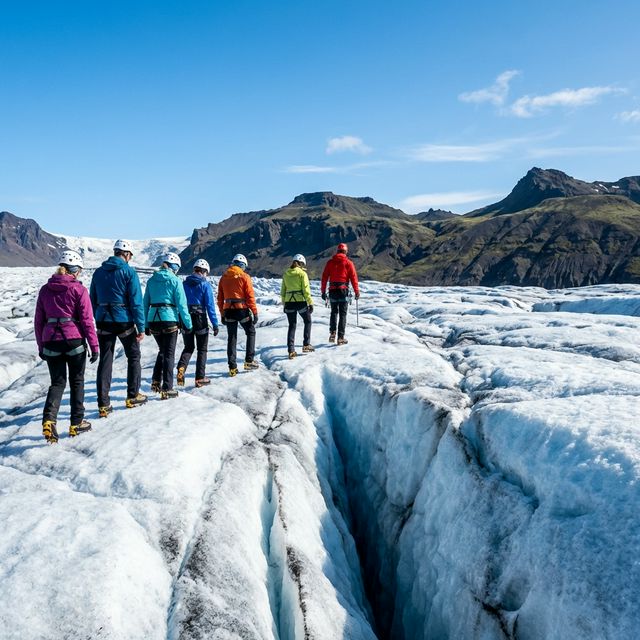
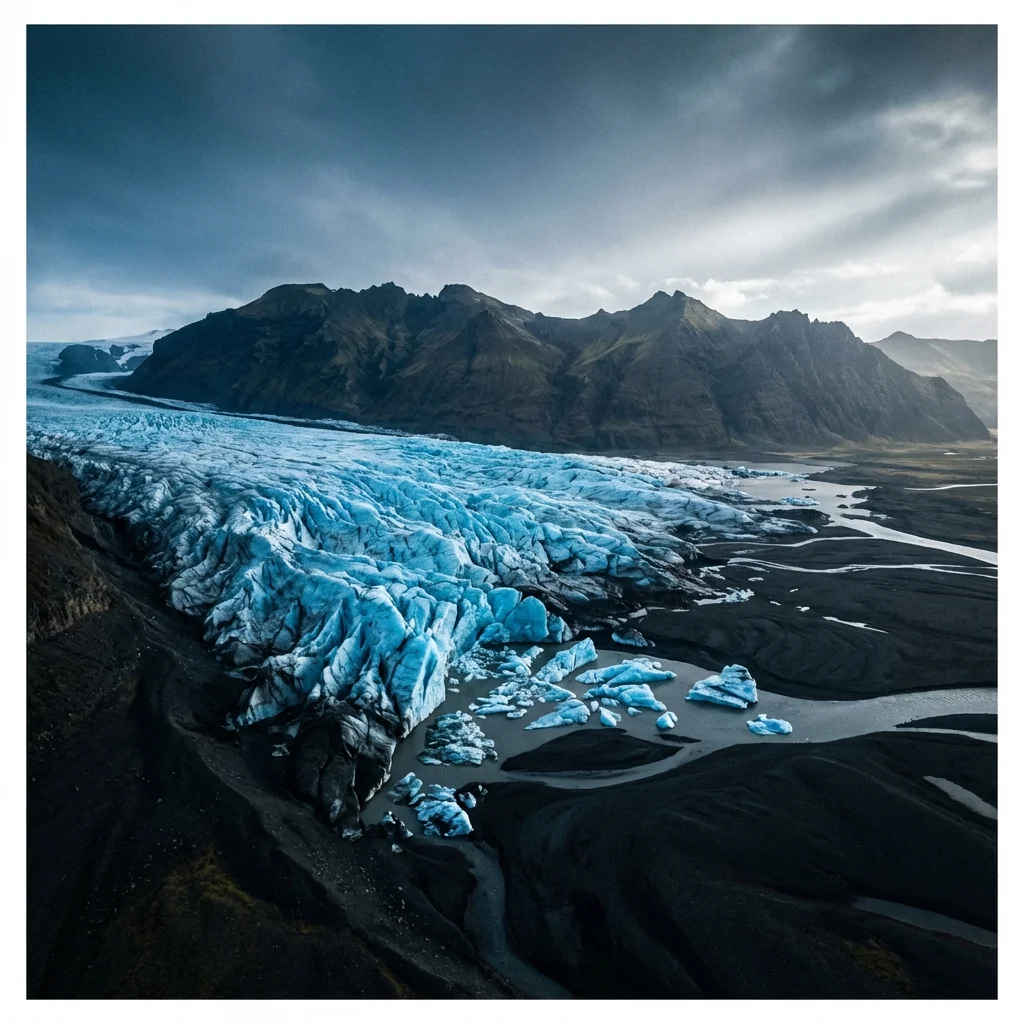
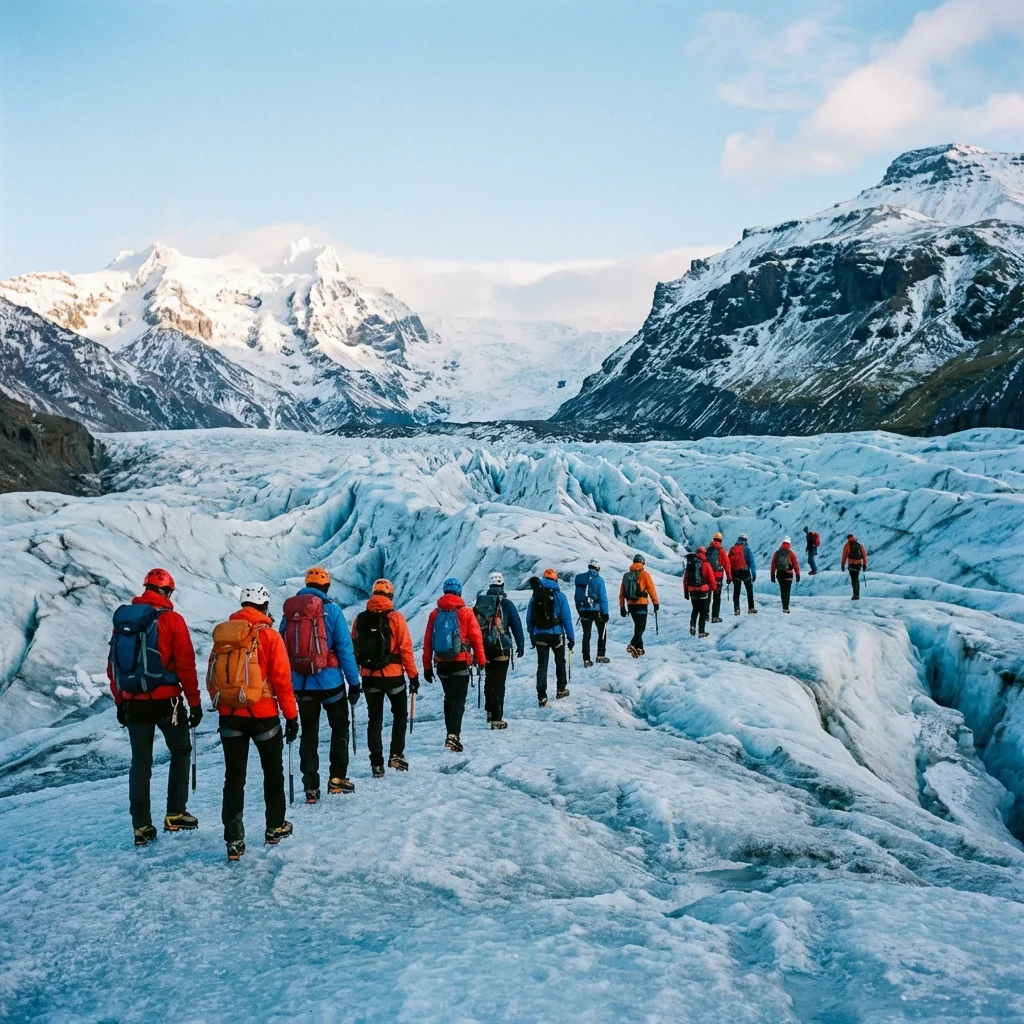
Step inside the crystal heart of Vatnajökull, Europe's largest glacier. Discover the deep blue formations and ever-changing landscapes of Skaftafell's natural ice caves.
Located in Vatnajökull National Park, Skaftafell offers the most diverse glacial experiences in Iceland.
Formed over centuries by the compression of snow into crystal-clear ice, the blue tones here are among the most intense in the world.
Unlike other caves, reaching a Skaftafell cave often involves a guided hike on the glacier itself, providing a true adventure.
Surrounded by the peaks of the Öræfajökull volcano and the black sands of the south coast, the setting is unmatched.
Confused by the names? Here is how the South Coast geography actually works.
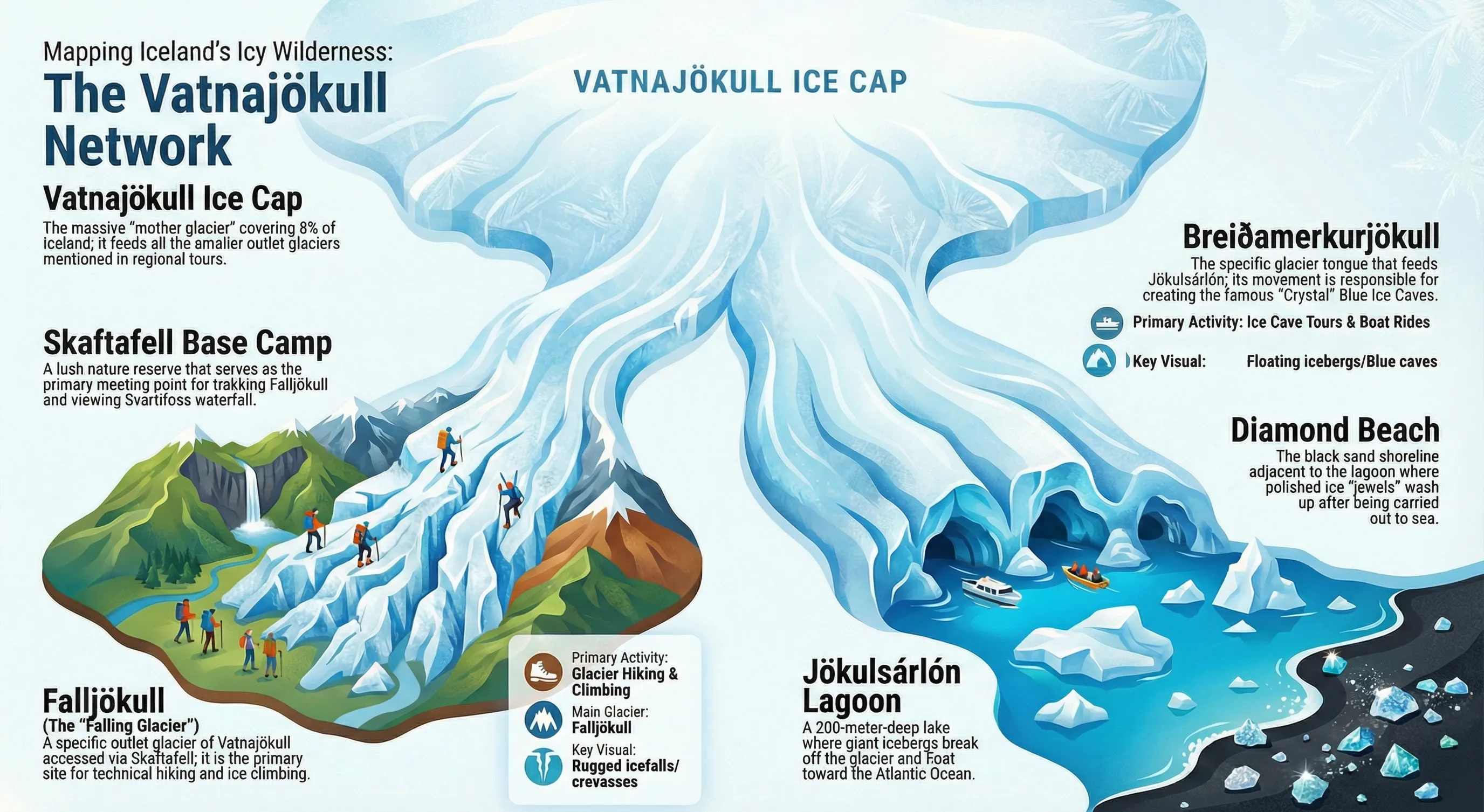
Vatnajökull is the glacier (the ice cap). Skaftafell is the gateway (the National Park) where tours start. You hike from Skaftafell onto Vatnajökull.
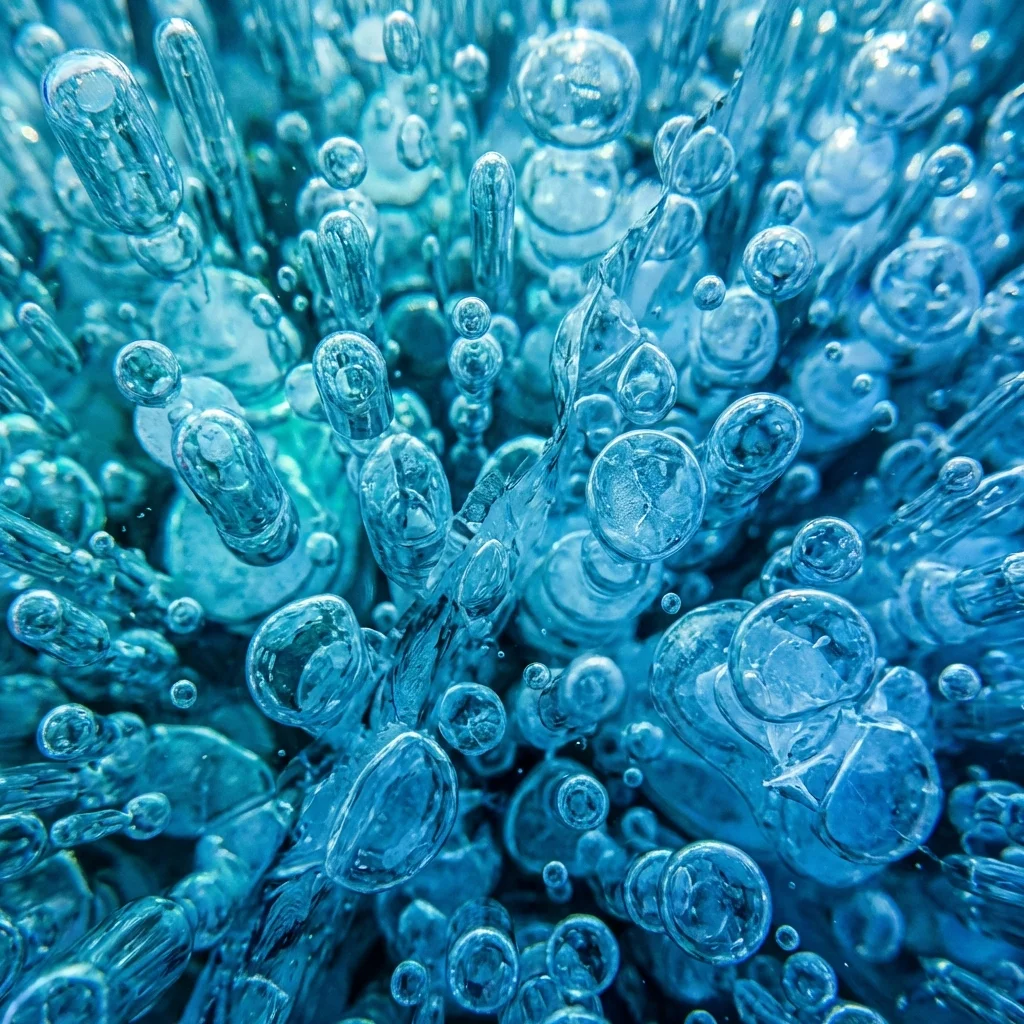
Skaftafell = Crystal Blue Ice (Winter
Only).
Katla = Black Ash Ice (Year-Round, near Vik). They are very different
experiences.
The famous Glacier Lagoon is just 45 minutes east of Skaftafell. It's the perfect stop after your morning ice cave tour.
No. "Skaftafell Ice Cave" is a term for the multiple crystal blue chambers that form and melt every year in the glacier tongues.
Read the Deep Dive Comparison →Skaftafell is not just for winter. It is the heart of Vatnajökull National Park, offering world-class adventures every month of the year.
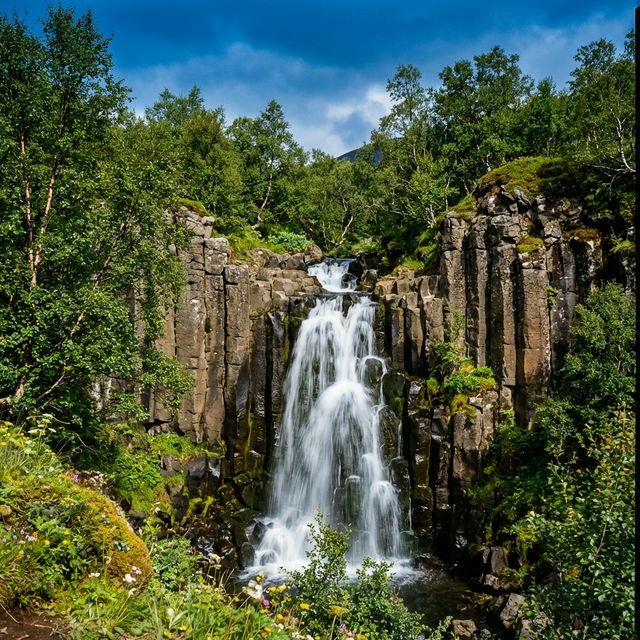
The iconic "Black Fall" surrounded by hexagonal basalt columns. A scenic 45-minute hike from the visitor center, accessible year-round.
Walk on the ice even in summer. The dramatic crevasses of Falljökull are accessible 12 months a year, offering spectacular blue ice views from the surface.
Skaftafell is the base camp for climbing Hvannadalshnjúkur, Iceland's highest peak (2,110m). A challenging spring/summer expedition.
Witness the raw power and ethereal beauty of the glacial subterranean world.
Walk through perfectly curved corridors of ancient ice, glowing with a deep, inner light.
Air trapped for centuries creates a complex, otherworldly texture inside the ice walls.
View the massive Skaftafellsjökull from above as it descends from the ice cap.
Natural blue ice caves are a winter phenomenon. They form each summer from meltwater and become safe to enter only when the temperature drops in late autumn.
Peak Season: November 1st – March 31st
Visiting in Summer? Read the Summer Survival Guide.
How does Skaftafell compare to the Crystal Cave or Katla? We break down the honesty facts on crowds, color, and cost.
The Comparison Guide →Don't let the low light ruin your shots. Learn the exact settings needed to capture the perfect 'Ice Wave' photo.
Masterclass & Gear →